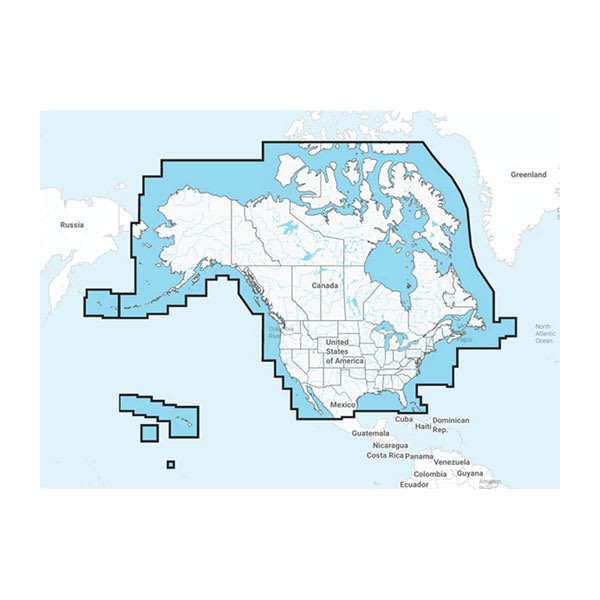
It's about time. Paper charts are going away.

Most people couldn't get from true course to course to steer to save their life!
Agreed, but while that’s certainly critical to navigating bigger tonnage, true courses have little to no practical application in piloting a small boat, especially with the prevalence of other tools nowadays that can and should be used in conjunction with a properly adjusted magnetic compass. Reasonable to expect 3 or 4 degrees deviation on the intercardinals on a quality, swung and adjusted compass, but in practice, that’s well within the running corrections it’s reasonable to expect to make anyways on a small boat. Sure, it’s always better to keep it precise as possible, but for many, if not most, recreational boaters practical wins over precise.
 
People had better have redundancy if they are taking trips to new locations. We had three. Garmin, Furuno, and Nobeltec. From what I have seen people have had their faces planted on a glass bridge for some time. Instead of learning to read the water in the Bahamas they stare at the screens and plow on.

I really would not want to be fumbling with a paper chart at night while traversing an inlet. I cannot imagine turning the lights on to read the chart.
I call it “driving a chart plotter” - that phenomenon where someone forgets about all the other tools surrounding them. Especially radar - that seems to be the most ignored and underutilized piece of Nav gear.
 
Radar: good. It represents reality.

Charts ( any version, any format ) resemble history. In the area around the Louisiana delta, charts were closer to fantasy than reality. According to the charts, some of the best deep fishing holes are in the middle of dry land.

Don't get me wrong. I use and rely upon charts, but always with a bit of skepticism. Not like on land where "modern boaters" expect to follow their GPS right up to the front entrance of the restaurant. On water, you are indeed at the GPS location, but the land you expected left a decade ago... :)

I always enjoyed looking carefully at the "base data statement". Some of the depths were taken by lead line a couple of years post civil-war. I am sure that the data was accurate for it's time, but by modern standards that sounding might be several miles off, and there was less than one sounding per sq mile.

But I like paper charts anyway. ( except when the "master plot", with all the planning blows overboard 15 min after leaving the dock on a three week trip)...
 
I don't know about marine, but believe it or not the FAA has a plan for GPS outage. It is called, "MON". Minimum Operating Network. They have a plan to revert to radar, VOR's and ILS's to make it all work. It will look like the PATCO strike of the early 80's but you will be able to operate, maybe not on your time table or to your favorite airport, but to a nearby one at least.

As for marine, the CG has demonstrated "eLoran" as a backup but no one has funded it. Cost is cheap, only about 400 million, but I guess a Congressman can't cut a ribbon on it so not much to notice and get notice for implementing.

As for paper charts, dead, done and over with. The iPad made them obsolete. Not that the iPad is primary, but after the charts in the chart plotter throw craps, you have a self powered backup. I like three, so for instance in my airplane I have the charts from the built in avionics displayed. If that fails, I go to the iPad, if that fails, I go to the iPad mini in my bag. If that fails I go to my iPhone Max. I also keep an Anker battery back up pack to power them for three day if need be. I have the charts and software on all three. Airliners don't carry paper charts anymore either. All in the avionics with iPads backing up. Millions of flights each year operate this way and so far, no problems.
 
GeeBee, I get it. Redundancy is your friend.

BUT, unlike aircraft, boats have a high likelihood of things getting wet. And this is when electronic charts are at a disadvantage. Paper charts work when wet.

Not perfect, but good, cheap, and reliable.
 
Otter Box for iPad. There are plenty of others too.
 
How much do electronic charts cost these days for an area such as west Florida. I now that there are free charts but in the past they weren't integrated into the chart plotters and full set could cost more than the plotter.
 
Wet isn’t a concern. Pretty much every phone is waterproof these days and for my iPad I have a life proof case

cost of Echarts has become irrelevant. Dirt Cheap these days. I don’t even remember what I paid for complete US and Canada charts on Aquamap but it was way under $100.
 
chart upgrade for my new Garmin GPS map is about $300. Not sure why you'd need more detail than the installed G3 charts?
 
Greg:

What area did the $300 upgrade cover? In past if I wanted entire east coast for my Garman they were very expensive.
 
I don't remember Bruce. I don't believe it was the entire East Coast though.
 
Radar: good. It represents reality.

Charts ( any version, any format ) resemble history. In the area around the Louisiana delta, charts were closer to fantasy than reality. According to the charts, some of the best deep fishing holes are in the middle of dry land.

Don't get me wrong. I use and rely upon charts, but always with a bit of skepticism. Not like on land where "modern boaters" expect to follow their GPS right up to the front entrance of the restaurant. On water, you are indeed at the GPS location, but the land you expected left a decade ago... :)
<snip>
That's why I like the Community Edits feature of Navionics charts.

 
Problem is that most boaters don’t know how their Sounders are calibrated and what the tides are That’s the problem with crowdsourcing. Hundreds of times, I ve seen comments on active captain like. We had 5’ under the keel. Duh... what’s your draft and what was the tide?

same with Crapionics Sonar charts... unclear how they take transducer location and tides into account. Maybe that s why Sonar Charts are so bad here in the Bahamas
 
Back
Top