My Idea In Use, Strobe Beacon On Boats

GeeBee

Well-known member
Member
Joined
Jan 1, 2000
RO Number
385
Messages
2,871
Some years ago we had a discussion on this forum about the ipoor state of marine nav lighting. I said based on my aviation experience a strobe beacon would be useful. Many disagreed. Well.........

In both Australia and New Zealand a vessel capable of 20 or more knots is required to have an amber strobe beacon displayed both day and night. They use a fairly small unit which has a lower shield to protect the helmsman's eyes.

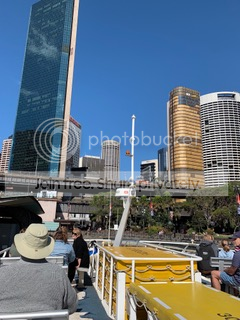
I am sitting here looking out on Auckland harbor and I can see 5 vessels running. 4 of the 5 I cannot see the nav lights but I can see the beacon. I was aboard a ferry last night and it really helped. You use the beacon to lead you to the nav lights.

The concept really works.
 
I agree that lights can be a problem but a yellow or amber flashing light is supposed to be for hovercrafts according to international rules...

I also believe that in close quarters, or when passing in a channel, a yellow strobe would kill your night vision

The solution is to enforce existing rules. The problem isn’t that nav lights are hard to see, it is that way too often they either don’t work or are too dim
 
Years ago white strobes were sold for sailboat masts, for better visibility from ships when offshore, until somebody determined thety were against the regulations.
Strobes offer advantages especially when in an area of a lot of background light.
 
I don't like this idea unless and until it is incorporated to the COLREGS. Different nav light configurations in different sovereign states is a recipe for disaster. I believe everyone should strive to match the COLREGS (International Regulations for the Prevention of Collision at Sea, as amended 1972) as closely as possible for steering and sailing rules, lighting, signaling, and sound signal compliance. If those rules suck, push for a change, but for the sake of safety in international commerce and navigation, everyone should be on the same page, IMO. If strobes are working out well - cool, get the IMO onboard with it, and everyone wins.
 
quote:

Originally posted by pdecat

Years ago white strobes were sold for sailboat masts, for better visibility from ships when offshore, until somebody determined thety were against the regulations.
Strobes offer advantages especially when in an area of a lot of background light.


Recipe for disaster (or at least gross misunderstanding) given one of the Inland distress signals - the only one recognized under Inland rules but not International - is a "high intensity white light flashing at regular intervals of 50-70 times per minute".
 
I think the flash pattern on these lights is diiferent than hovercrafts. It is 3 quick bursts followed by a pause. I agree internationalizing would be good idea. Standing on deck, the same deck as the helm I found no night vision distraction. you really have to see it to see how good it works. I talked to two different boat Captains who were working when the reg came into place and they say it really helps.
 
Submarines may display, as a distinctive means of identification, an intermittent flashing amber (yellow) beacon with a sequence of one flash per second for three (3) seconds
followed by a three (3) second off-period (32 CFR 707.7).
 
Effect on night vision will depend on the boat. Larger boats usually have deck lights and are pretty visible. It s on smaller boats, under 50/60’ that a flashing light will reflect on railings, structure and cause problems.

We spend a lot of time running at night, especially in Miami with tons of lights in the background. Boats operating with the proper lights are easily visible and a non issue. The problem comes from idiots with missing lights or with Color LEds making it difficult to know which way they’re going Example red lights in hardtop of a flybridge hiding away the single green in the red clutter
 
I thought I read somewhere that blinking lights don't register as ON so it shouldn't affect night vision.

While running in the dark, usually early in the morning to get the best fishing spot, The all 'roud lights were totally inadequate...except for the tugs towing. The background lights just interfered. Mainly because quick identification of a vessel was more important, just to know it was there.
 
quote:

Originally posted by PascalG

Effect on night vision will depend on the boat. Larger boats usually have deck lights and are pretty visible. It s on smaller boats, under 50/60’ that a flashing light will reflect on railings, structure and cause problems.

We spend a lot of time running at night, especially in Miami with tons of lights in the background. Boats operating with the proper lights are easily visible and a non issue. The problem comes from idiots with missing lights or with Color LEds making it difficult to know which way they’re going Example red lights in hardtop of a flybridge hiding away the single green in the red clutter


I did not experience any bounce off the boat due to the guard on the bottom of the mount.
 
What kind of boat, size, layout etc?

What about when you cross a vessel with such a light in a narrow channel? Enough idiots already using spotlights as if they were a car headlight

I just think it s a solution to a non problem and again I spend a lot of time on the water at night, in an enclosed skylounge with glass that reduces vis
 
Ferrys I can understand as there is likely to be a large roof but not on a small open boat
 
If you look at the white nav light on poles they have no glare problem. The focused beam goes out above the operator. Given the speed that bass boat was moving across Sydney harbor (he had the full kit bythe way, trolling motor, power poles, big outboard) a beacon would be very much in need.
 
Here is a nice picture of a beacon mounted on a mast. Note the shield.

Marine%20Beacon_zpswaedhkvv.png
 
My understanding from a marine safety class about 100 yrs ago or so was that strobe lights were not allowed for general use except to indicate a true distress situation. Using them for improved "noticeability" during general navigation would create a false distress impression and unintentionally attract help when your intent is to stay clear.
 
Not if you are in Australia or New Zealand. They are required lighting for boats capable of 20 knots or more. Standards vary but this is their standard and I find it highly practical and useful.
 
Back
Top