Varnishing

Craig Lewis

Member
exMember
Joined
Feb 15, 2001
RO Number
3451
Messages
50
I'm now into antique boats it seems...
as I just purchased a 1953 Dunphy clinker
type runabout. I have a '58 ' 57
Merc mark 78 to put on her. She needs a
little cleanup and varnishing.
I am a novice at this but have done some.
I was thinking of just a wet sand with
320/229, clean, tack rag, and varnish
with a Bristol product.
Is this a reasonable plan? Not sure which
temperature/humidity/ et to worry about.
Thanks,
Craig
 
Yes it's a reasonable plan. Just be aware Bristol is very thin and a little fussy to work with at first.
 
Bristol advice
Use a FOAM brush and SLOW STEADY strokes for no bubbles in the finish. More coats = deeper finish results depending on what you want it to look like.
 
Everybody has their own methods and favorite products but here's what I like after after 11 years of wooden boat ownership/maintenance.

for varnish in good condition: sand w/220, varnish, repeat.

for failed varnish: chemical strip, sand to bare wood 60/80/120. 60 grit is like rocks and you only need it to remove deteriorated wood. Stain with filler stain, two coats of sealer, 12 coats of varnish (for exterior.)

paint in good condition: sand with 120, 220, or 320. Paint and repeat. I like 320 for a second coat of paint on top of a fresh coat.

paint in failed condition: chemical strip, sand 60/80, two coats of primer or undercoater, two coats topside enamel.

favorite products:
Pettit BAK-V-SPAR Varnish. Traditional phenolic base spar varnish with UV inhibitor. I never thin it.
Pettit Clear Sealer
Interlux Brightsides topside enamel
Pettit Easypoxy topside enamel
Sikaflex 291LOT: for sealing and bedding
3M 5200: for sealing and adhesive
varnish brushes: Ace Hardware ox bristle. Sizes from 3/4" to 3"
paint brushes: China bristle in 3/4" to 4"
chipping brushes for touch-ups: disposable china bristle

3M blue masking tape. Accept no substitute.

Check the cans for application temperatures. For the oil-based varnishes and paints I like to paint as early in the morning as I can, as long as temps are over 60 degrees and the surface is free of dew. I've done paint and varnish at 90-95 degress many times, but you have to work very fast to keep a wet edge. If you varnish or paint late in the day and outdoors, you run the risk of getting a nice coating of gnats.

Varnishing technique: I learned my technique from Sierra Boat Works. They finish many boats that compete at the annual Lake Tahoe Concours d'Elegance. Use the largest brush that will suit the job, load it with with a lot of varnish and work fast, letting your blue tape do the edgework. It may take me a couple of hours to sand and mask the transom on my 26', but it takes me less than 10 minutes to brush on a heavy, unthinned coat of varnish that will look like a sheet of glass.

I've seen a guy at Sierra Boat varnish a hullside of a 20' runabout in about 5 minutes.
 
I love the gnat comment. No kidding!

I have not used Bristol before, but it did strike me as a question as to whether you would want to apply something like that on top of varnish. There's varnish and then there is everything else. Usually you do one or the other. I have no idea what topcoating would do, or whether it even makes sense to no topcoat with just more varnish if it is still serviceable. Topcoating varnish is as easy as any other coating on the face of the planet, and you KNOW that's going to work!
 
You can topcoat Bristol over varnish just fine. As long as the varnish is fully cured/dried.

"but it takes me less than 10 minutes to brush on a heavy, unthinned coat of varnish that will look like a sheet of glass."

How do you manage to apply a "heavy" coat of varnish to a vertical surface without sags?
 
A vertical surface is the biggest challenge in varnishing, but I promise you anyone can learn how to do it perfectly before doing coat twelve.

I pour off the varnish I'll need into a one quart plastic mixing jar and work from that. The varnish can is opened long enough to pour some out and then it’s quickly sealed again. Load up the brush with varnish. As long as varnish doesn't drip off your brush somewhere between the mixing jar and the boat you're fine.

Ideally, you want to varnish one hull side or transom section with each loaded brush. That section should extend from the rail to the boot stripe for an even distance from the wet edge. The size of that section depends on how big of a brush you use and how you load it.

The first set of brush strokes will slop most of the varnish onto the surface. Stroke in one direction: horizontally and away from the wet edge. Start these strokes an inch or two away from the wet edge. Make your first brush stroke at the top and the then move a brush width or a little more down for each following stroke until the brush starts to run out of varnish. Then reverse sides of the brush and unload the other side.

After the second side of the brush starts to runs out, catch your runs with a few horizontal brush strokes. Then go back to the top and make firm horizontal strokes over the same area and in the same direction overlapping the wet edge an inch or two.

Firm brush pressure forces varnish into any cracks and helps level the varnish.

Now do a set of diagonal strokes. Move from the top to bottom while overlapping the wet edge. Use firm strokes here.

Do another set of firm horizontal strokes like before, bottom to top.

Now for the last pass with the brush. Use light brush pressure to feather the wet edge and finish leveling. Again, use horizontal brush strokes in the direction away from the wet edge.

Now you are ready to reload the brush and do the next section.

Work quickly. Each stroke should take one or two seconds. You want to reload the brush and start the next section before you loose the wet edge.

You can thin varnish a lot and it will still work, but I thin varnish only if I'm working from an older can that has thickened a little from the original viscosity. If you want the thickest build and highest gloss, don't thin it out. I swear thinning effects surface tension enough to reduce gloss.

After you do a couple of coats, you will be able to judge how much varnish you are putting on the surface by the look of the varnish and the brush feel. You will learn how to hang that varnish just short of the sagging point. That’s where a full-bodied varnish works your advantage.

Keep an eye out for sags as you work. If you find some sagging, try to brush it out even if you leave some dry brush marks behind. That's a lot easier to deal with on the next coat than sanding out a dried sag.

The Pettit BAK-V-SPAR varnish I use has the longest wet edge of any varnish out there. Summer wet edge time is somewhere around 90 seconds. It typically dries to the touch with two hours during the summer. If I varnish in the morning it cures fast enough to let me sand it later in the day and put on another coat the next morning. Fast-drying varnish reduces the time you have to work it with a brush.

This transom actually leans past the vertical plane. The top edge overhangs the waterline by a couple of inches. As an example, a loaded 3" brush will cover about two and a half feet of this transom from top to boot stripe.

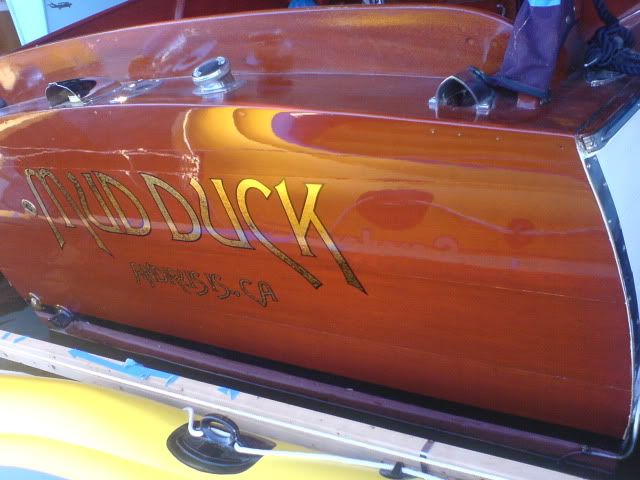
DSC00400.jpg
 
That is basically how I've done it. I guess I've just never thought of it as applying a "heavy" coat.

A heavy coat to me would be the brush loaded up to the point of dripping. :-)
 
yzer,

Notwithstanding your political persuasion, I think that your boat is a thing of beauty and has always intrigued me. Is there some place that I can go online to view photos?

Thanks.
 
Back
Top