quote:
Originally posted by keithheikkinen
My early questions involved the ability, or lack of an O2 sensor and what that might mean, how to best make it play with the existing distributor and how to tie to the ThunderBolt IV ignition system.
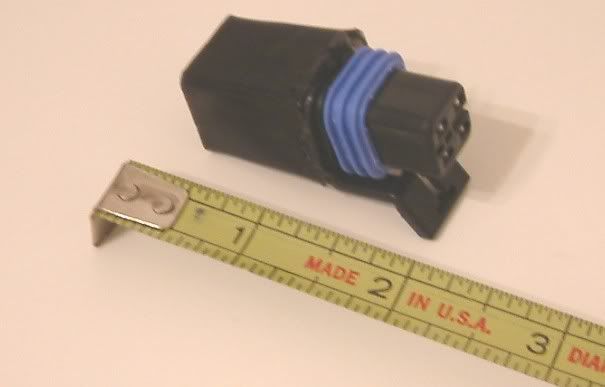
I can help with the O2 sensor. I do not want to violate the forum rules so I will not post links to other sites. What you want is a O2 simulator. This effectively bypasses the O2 sensor (since you don't have one) by plugging into the harness. This "tells" the ECM that it is there. They sale these at Summit Racing, Jegs, Street and Performance, Ebay, and if you google you can find them. You will need to know whether yours is a 2, 3, or 4 wire harness.
You might also look at the Wide Band O2 (also known as WBO2) instead of the O2 Simulators.
Here is one:
quote:
Originally posted by keithheikkinen
Holley computer controlled distributor that matches the Holley MPI I have. It's not "marinized, but all I need to do is seal the vents in the bottom and add a gasket and instant marine distributor. This also then means I no longer need the TB-IV ignition and the ECM will control the ignition and advance. That was easy enough.
In my opinion the Holley distributor is the route you should take. They do make a marine distributor for that application as well. Check out Jegs, and Summit, they have them.
quote:
Originally posted by keithheikkinen
Other problems, and something I was warned would be real big issue was need for a fuel return line. That was actually quite easy, I thought. The other was the throttle cable mount that came on carb was completely wrong for the new TB. That too was not a big problem. I modeled what I needed in CAD and had a friend cut it out of aluminum plate on a water jet. It matches the rest of the intake and TB and looks like it was part of the kit.
Keith, Street and performance has you covered on that too. Sale both holley fuel pumps and buy their fuel pump that does not require a return line. I am sure Aeromotive, Barry Grant, and others have them on the market now, too. These as well as the O2 bypass were intended for the late model engine swaps. Like putting a LS series GM motor either a crate motor or pull out from a Vette or Camaro into say a 1968 camaro. Originally you had to install the return line. Well that stopped. In fact the early 2000's GM went to a totally return line less setup. Granted those are different engine platforms, but the principal still applies.
quote:
Originally posted by keithheikkinen
That said, I have now stripped off the top of the engine, Fresh water cooling system, intake, harness (engine). I removed the fuel system back to the water/fuel filter and the mechanical pump. Ordered a block off plate from Jegs and now just have to put humpty dumpty back together again. Oh, didn't think I liked the alternator, so I added a high output from George. Very nice and eliminates the two excitor wires and I need to upsize the positive and negative leads now for the higher output. Good time to do so, since the entire harness was off anyway.
Expect this will go pretty well. Oh, one other thing. You will want to switch the fuel pump and ECM with a relay. After some research a found a good constant duty 80 Amp (way more than I need I know) but very heavy duty. You could use one of the VERY common Ford starter solenoid relays too, but they are technically not rated for constant duty. They are bullet proof though and cheap.
I have a very reputable Alternator builder that has built me 260+ amperage alternators for my cars. I want him to build me one of these for the boat and I will simply have the case powder coated for longevity.
I agree on the large solenoids. I have used them before. You can also find those in use by the guys using electric truck winches. Just FYI
One like this right?
quote:
Originally posted by keithheikkinen
Last detail to be worked out is a way to "water resist" the ECM and relays. I have just started to think that throug, but should not be too bad.
Keith, If you can go to a local electronics parts store like radio shack, fry's, or online. Look for a plastic "project box". These are for people to make their own electronic projects with, but if you can find one large enough you could house it in there and install a few vents on the top side so it does not get too hot. They usually don't but like any other electronic, need to be vented. You can then drill a hole and install a grommet for the wiring to exit the box.
They have a side that screw down. You can keep it snug in the box with velcro so it won't bounce around and is easily removed for maintenance or testing.
Here are two examples:
I wonder how the ECM will react with the knock sensor, and/ or water temperature? I would imagine the water temp that some ECMs use would be inaccurate because the water in the boat engines is being constantly circulated. It should never get really hot. That might become and issue as well.
quote:
Originally posted by keithheikkinen
MPI is expensive, and no way it's worth it, but everything I do on this boat is an experiment and project for the purpose of project. So far, everything has worked out very well. Love learning new things.
I would never got to TBI. MPI is the only way to go. I was hoping I would not have to go this route, but I guess it is probably the best way. I was hoping that there was an after market MARINE specific kit, but guess I will have to go with the Fuel Air Spark Technology (FAST) computer, a custom harness, and Throttle body.
As you can tell I am pretty knowledgeable (I have done it in the automotive world for years), but I am new to the boat side of things. I guess using GM engines is pretty much the same.
Now are there any electronics in the Bravo drive units that rely on the engine management?
My boat as well is a test ground for me. I do not spending the money or time on it as it is a labor of love. I have the ability and some of the know how. I am still feeling my way through the whole "it's a boat not a car" thing.
I really appreciate everyone's help. If you have anything else let me know.. Maybe I can help on somethings too?